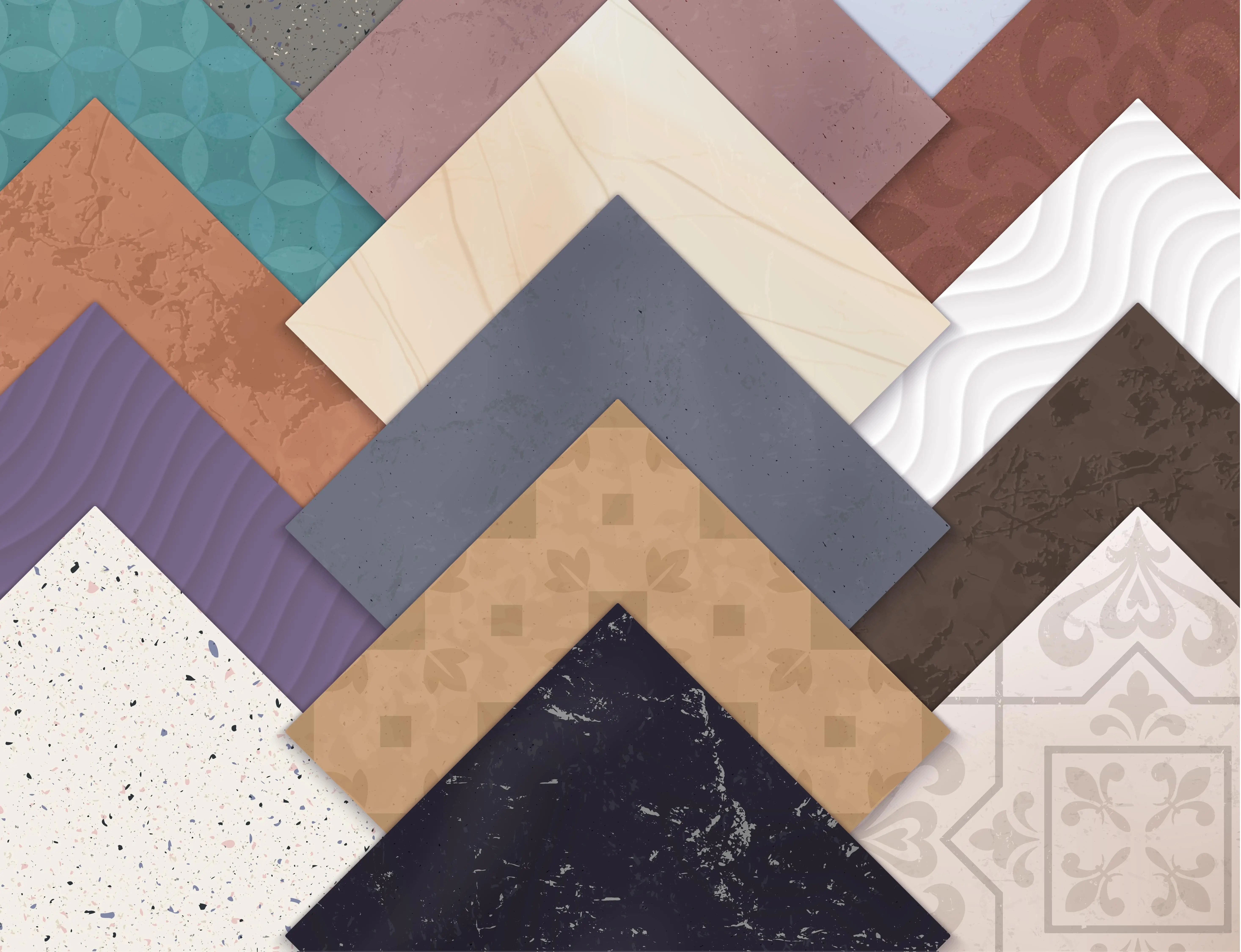
Choosing the best roofing tiles in Kenya requires balancing the classic thermal comfort of clay against the modern installation speed of Decra sheets.
Clay tiles cost approximately KSh 80 to KSh 120 per piece, which translates to KSh 1,200 – KSh 1,500 per square metre. Decra sheets average KSh 2,800 – KSh 3,500 per square metre, depending on the profile.
Just as with selecting interior finishes from our extensive online tile shop, the best choice requires looking beyond the price tag. You must consider how heavy Limuru rains sound against your roof and how much heat a Mombasa sun traps in your attic.
Financial Breakdown Clay Tiles vs Decra Sheets
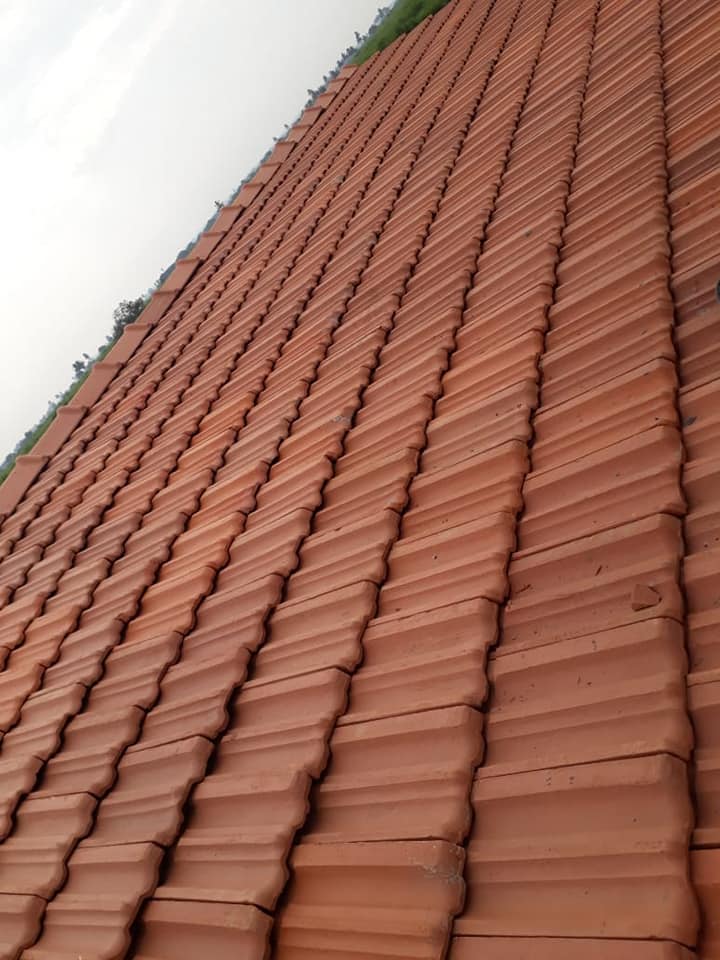
Many homeowners calculate roofing costs by multiplying the material price by the roof area, an approach that often leads to budget overruns.
The true financial picture emerges when you account for the structural skeleton required to support the roof. Clay demands a significant investment in timber, while Decra requires a higher upfront payment for the sheets themselves.
Comparing Initial Material Costs Per Square Metre
Clay tiles, primarily sourced from local manufacturers like Saj Ceramics in Central Kenya or the coast, offer a lower entry point per unit.
Coverage is key; you typically need 13 to 15 standard Mangalore or Portuguese clay tiles to cover one square metre. Conversely, genuine stone-coated steel sheets cover a larger surface area per unit, but the purchase price is higher due to import duties and manufacturing technology.
| Cost Factor | Clay Roofing Tiles | Decra Stone Coated Sheets |
|---|---|---|
| Material Cost (Approx.) | KSh 1,200 - 1,500 per m² | KSh 2,800 - 3,500 per m² |
| Timber Requirement | High (Heavy gauge trusses) | Low (Lighter gauge battens) |
| Labour Cost | Higher (Intensive laying process) | Lower (Rapid sheet installation) |
| Total Estimated System Cost | High (Driven by timber cost) | Medium-High |
Analyzing Truss and Installation Cost Differences
The timber budget reveals the hidden costs of clay tiles. Their substantial weight requires a robust timber structure to prevent sagging or collapse.
You must budget for closer rafter spacing and heavier gauge, treated timber, often 4x2 inches or larger, which increases the wood bill. Decra sheets are lightweight in comparison.
They impose a minimal load, allowing for wider truss spacing and lighter timber. This structural saving effectively offsets some of the high initial material cost.
Factoring in Long Term Maintenance and Repairs
Clay tiles are brittle. A dropped tool or impact from falling branches can crack them, necessitating periodic replacement of individual tiles.
The material itself, however, does not rust and its colour deepens over time. Decra sheets, particularly cheaper imitations, face corrosion as a long-term risk. Once the stone coating wears off, the steel core becomes vulnerable.
Re-roofing a house with Decra usually means replacing entire sheets, whereas clay repairs are localised and simple.
Structural Engineering for Clay and Decra Roofs
The weight of your roof dictates the engineering of the entire house, from the roof trusses down to the foundation footings. Overlooking this detail can lead to structural cracks in wall plate beams years after construction is complete.
Comparing Weight Per Square Metre
The mass difference is significant. A square metre of clay tiling weighs approximately 45kg to 50kg. A 150-square-metre roof carries a load equivalent to several saloon cars.
In contrast, Decra sheets weigh about 6kg to 7kg per square metre. This lightness substantially reduces the dead load on the building's lintels and columns.
How Roof Weight Impacts Truss Design and Timber Costs
Timber selection is a matter of physics. A clay roof demands a complex web of trusses, purlins, and rafters engineered to hold static weight without deflection. Builders must use seasoned, treated cypress or pine of substantial thickness.
Stone-coated steel sheets permit a more forgiving timber skeleton. The battens can be spaced further apart, reducing the overall volume of wood required by 30-40% and simplifying the carpentry work.
Structural Integrity for New and Old Buildings
Adding clay tiles during a renovation of an older house with uncertain foundations is a structural risk. The added load could stress existing walls beyond their capacity.
Decra is the superior choice for retrofitting or for lighter construction methods, like steel-framed houses. Minimising top-heavy weight is crucial for stability, especially in the seismic zones within Kenya's Rift Valley.
Durability in the Kenyan Climate
Kenya's climate varies from the humid, saline coast to the chilly, damp highlands. Your roof acts as the primary shield against these environmental pressures.
Performance Against Sun Rain and Wind
Clay tiles possess excellent thermal mass. They absorb heat during the day and release it slowly at night, which helps keep interiors cool in hot regions like Kisumu.
They are impervious to UV radiation and salt air, making them ideal for coastal homes. Decra sheets reflect heat effectively due to their aluminium-zinc coating.
The quality of the stone granules is critical to resist UV degradation; poor quality sheets shed their granules within five years, exposing the metal beneath.
Fire Resistance and Safety Standards
Clay is produced in a kiln and is completely non-combustible. In areas prone to bushfires, clay offers superior safety. Stone-coated steel is Class A fire resistant and protects against airborne embers.
However, the acrylic bonding agents used to hold the stone chips can scorch under intense, direct heat.
Lifespan Expectations and Manufacturer Warranties
A high-quality clay roof can last 50 to 70 years, often outliving the timber structure it rests on. It ages gracefully, developing a natural patina. Genuine Decra roofing typically carries a 50-year warranty.
The aesthetic lifespan, meaning how long it looks new, is closer to 20-30 years before fading becomes noticeable. Shorter warranties on non-branded stone-coated sheets are a clear warning sign.
Aesthetics and Impact on Property Value
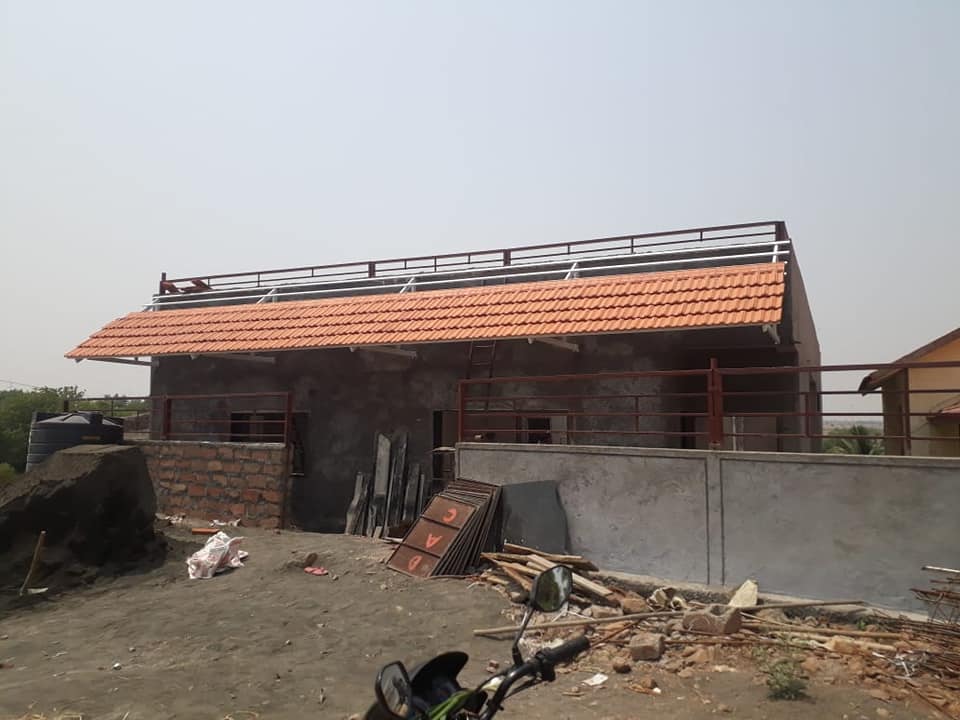
The roof's appearance establishes the architectural character of a property. It is a major factor in its overall visual appeal and perceived value.
Matching Roofing to Architectural Styles
Clay tiles provide a sense of permanence and tradition. They are the standard for Mediterranean, Spanish, and Swahili architectural styles, creating a textured, rhythmic look.
High-quality porcelain tiles for flooring often complement this premium aesthetic. Decra sheets offer a sleeker, more contemporary profile. They mimic the look of tiles or shingles but with a cleaner geometry that suits modern maisonettes and minimalist bungalows.
Comparing Colour Palettes and Profile Designs
Clay is generally limited to earth tones such as terracotta, antique brown, and other kiln-fired variations. This perceived limitation is also a strength, as these colours blend harmoniously with natural landscapes.
Decra offers greater versatility with a spectrum from charcoal grey and forest green to deep blues and coffee browns. This allows for precise coordination with exterior paint and window finishes, reflecting some of the modern tile trends seen indoors.
How Roofing Choice Affects Property Resale Value
In the Kenyan real estate market, clay tiles often signify a "premium build." They imply that the builder did not cut corners on the structure. A pristine Decra roof is increasingly viewed as a high-end, low-maintenance option.
The risk with stone-coated sheets lies in fading; a faded metal roof significantly lowers perceived property value, whereas an aged clay roof retains its classic charm.
Installation Maintenance and Liveability
Living under a roof is a sensory experience. The sound of rain and the frequency of repairs directly impact your comfort.
Installation Speed and Labour Requirements
Laying clay tiles is a slow, methodical process. Installers must align each piece, wire them down on steep pitches, and perform intricate cuts at valleys and hips.
This extends the construction schedule. Decra sheets are rapid to install. A skilled team can roof a standard three-bedroom bungalow in two to three days, reducing labour costs and securing the building from the elements quickly.
Comparing Routine Maintenance Needs
Clay roofs require periodic inspection to check for cracked or shifted tiles, especially after heavy storms. In damp areas, they may attract moss, requiring pressure washing to maintain their appearance. Decra is largely maintenance-free if the valleys are kept clear of debris. The stone coating's texture naturally resists fungal growth better than porous clay. This focus on durability is also a key factor when comparing ceramic vs porcelain tiles for flooring.
Acoustic Performance During Heavy Rains
Clay tiles are dense and provide exceptional acoustic insulation. During a heavy Nairobi downpour, the interior remains relatively quiet. Metal sheets, even those coated with stone granules, can produce a drumming sound.
The stone coating dampens the noise significantly compared to plain iron sheets (mabati), but Decra is still louder than clay. Homeowners choosing Decra often invest in ceiling insulation like rock wool to dampen the noise, adding another cost to the budget.
Environmental Impact and Local Sourcing
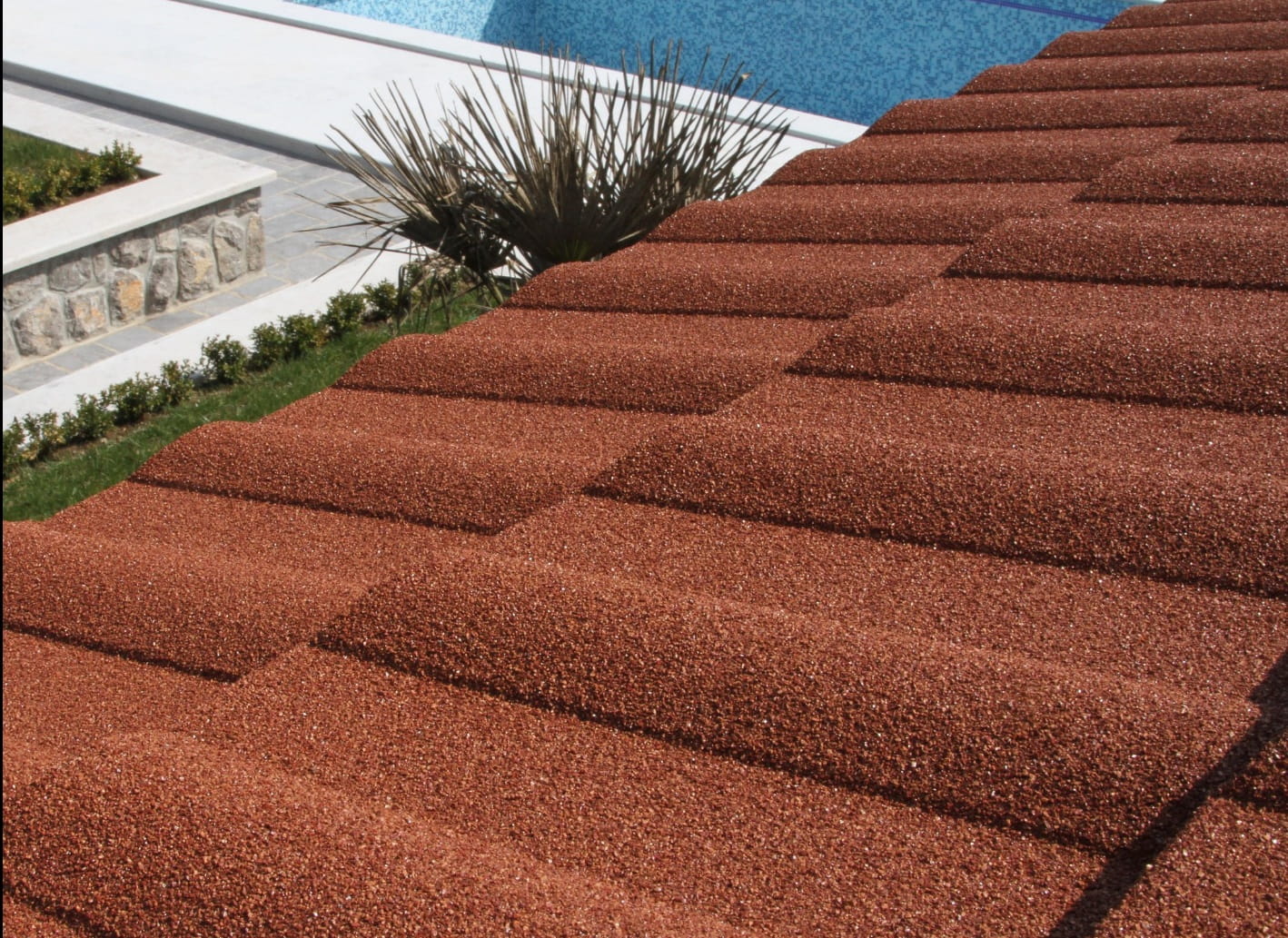
Sustainable construction practices are critical for reducing the carbon footprint of real estate development in Kenya.
Sustainability and Material Origins
Clay tiles are often the more sustainable local choice, manufactured from Kenyan clay deposits. This supports local industry and reduces carbon emissions from shipping. Decra and its competitors are largely imported from countries like New Zealand, South Korea, or China. The transport logistics increase the product's embodied energy.
End-of-Life Recyclability
At the end of their service life, clay tiles can be crushed and repurposed as aggregate for driveways or landscaping. They return to the earth without releasing toxins. Steel sheets are 100% recyclable and have scrap value, which prevents them from ending up in landfills. The stone coating residue can slightly complicate the recycling process.
Supply Chain and Availability in Kenya
Clay tiles can suffer from supply inconsistencies if local kilns have production backlogs, but the supply chain is domestic. Genuine Decra relies on international logistics. Currency fluctuations and import delays can affect pricing and availability, sometimes forcing builders to halt projects while waiting for specific profiles to clear customs.
Identifying Genuine vs Counterfeit Stone-Coated Sheets
The popularity of stone-coated steel has created a large market for counterfeits. These generic sheets look identical to genuine Decra when new, but they fail within 12 to 24 months.
The "stone" is often just coloured sand with a weak adhesive that washes away, clogging gutters and exposing a rusting metal sheet.
Always check for the manufacturer's stamp on the reverse of the sheet and demand a written warranty from reputable suppliers, like those listed among the best places to buy tiles in Kenya.
Feature Comparison Clay Tiles vs Decra Sheets
| Feature | Clay Roofing Tiles | Decra Stone Coated Sheets |
|---|---|---|
| Weight per m² | 45 - 50 kg (Very Heavy) | 6 - 7 kg (Lightweight) |
| Timber Structure | Requires heavy gauge, closely spaced trusses | Allows for light gauge, widely spaced trusses |
| Acoustic Insulation | Excellent (Quiet during rain) | Fair (Drumming sound possible without ceiling insulation) |
| Thermal Comfort | Excellent (High thermal mass keeps interiors cool) | Good (Reflects heat well) |
| Installation Speed | Slow and labour-intensive | Fast (2-3 days for a standard house) |
| Lifespan | 50 - 70+ years | 50 years (warranty); aesthetic life 20-30 years |
| Maintenance | Check for cracks; potential for moss growth | Minimal; clear debris from valleys |
| Aesthetics | Classic, traditional, earthy tones | Modern, sleek, wide range of colours |
| Sourcing | Primarily local Kenyan manufacturing | Imported (New Zealand, Asia) |
Expert Advice on Choosing Between Clay and Decra
If your budget accommodates the heavier timber structure and you prioritise thermal comfort, acoustic silence, and a classic aesthetic, clay tiles remain the gold standard.
They represent a long-term investment in durability and traditional value. If you prefer a modern look, need to reduce structural load on your building, or require a rapid installation, genuine Decra sheets are the superior engineering choice.
Ultimately, the deciding factor is often not the price of the roofing material itself, but the hidden cost of the timber structure required to support it. For more expert guidance on building materials, explore our tiling resources.