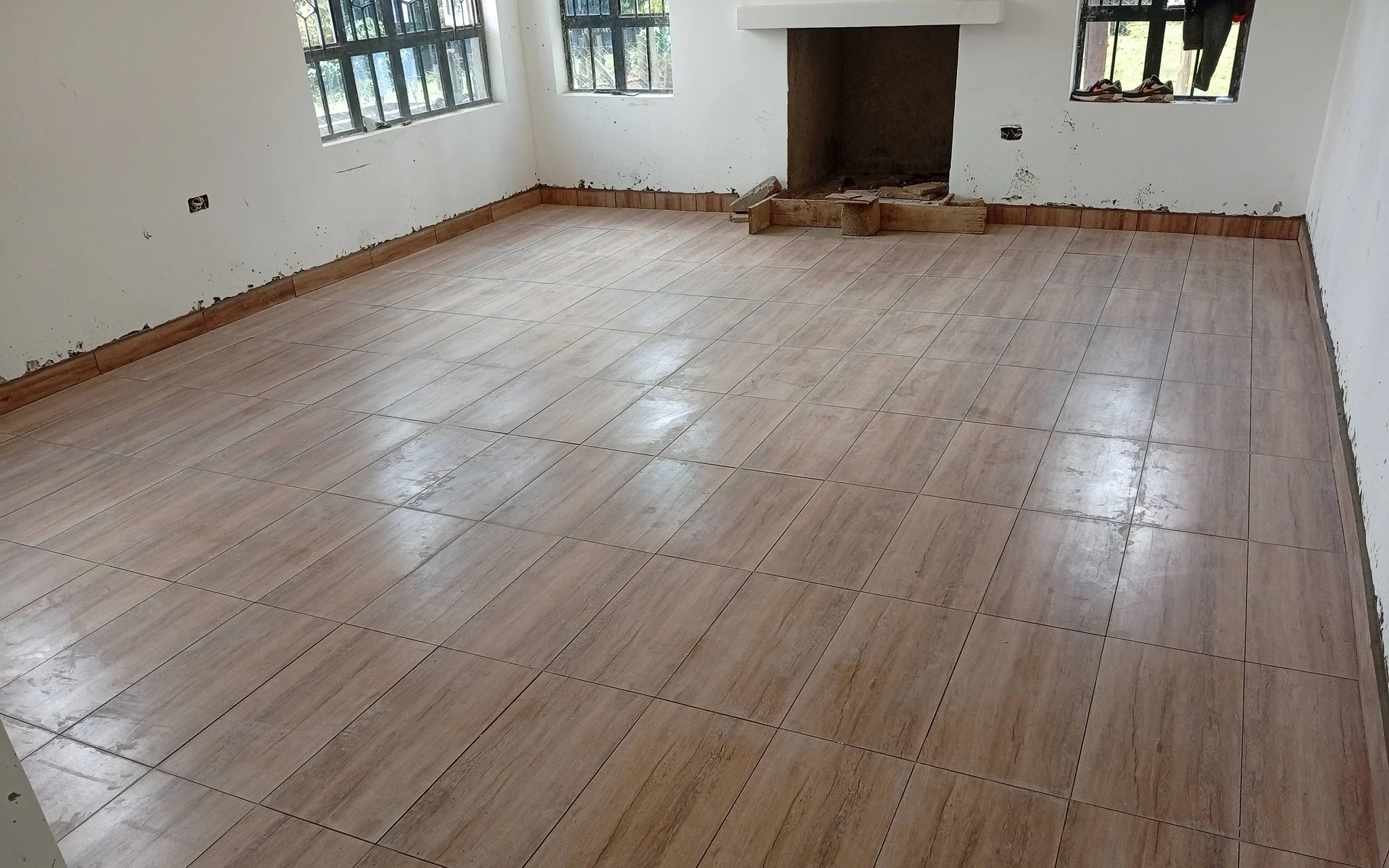
The cost of labour for installing tiles in Kenya currently averages between Ksh 300 and Ksh 800 per square metre. Specialised work on walls or staircases often requires a higher budget to account for technical difficulty.
Securing a firm quote protects your investment, ensuring that expensive porcelain tiles are not compromised by a rushed installation that results in hollow sounds or uneven edges.
Understanding these costs is crucial before you start browsing our online tile shop.
Projected Tile Installation Labour Rates in Kenya for 2026
Establishing a fair rate allows homeowners to negotiate effectively without underpaying skilled artisans, which often leads to poor workmanship. In 2026, labour rates have shifted slightly upward to account for the increasing complexity of modern tiling materials.
We differentiate strictly between standard floor installation and vertical surfaces, as the latter requires significantly more time and precision to combat gravity.
The following table outlines the projected fair rate sheet for labour only, excluding materials, in the Kenyan market:
| Installation Type | Projected Labour Rate (Per Square Metre) | Key Considerations |
|---|---|---|
| Standard Floor Tiles (Ceramic/Porcelain) | Ksh 300 – 450 | Applies to straight lay patterns on a level screed base. |
| Large Format Floor Tiles (600x1200mm+) | Ksh 500 – 800 | Requires a two-person team for handling and leveling clips to prevent lippage. |
| Wall Tiling (Kitchen/Bathroom) | Ksh 450 – 700 | Higher rate reflects alignment difficulty and laser leveling requirements. |
| Staircases (Per Step/Tread) | Ksh 800 – 1,200 | Charged per piece. Involves complex chamfering or bullnosing of edges. |
| Exterior Stone Cladding | Ksh 800 – 1,500 | Heavy materials require high-strength adhesive and possible mechanical fixing. |
How Tile Size and Pattern Affect Labour Charges
Tile size dictates the pace of work more than any other factor. Standard 300x300mm ceramic tiles are forgiving. A fundi can adjust them easily if the subfloor is not perfectly flat.
Conversely, large format rectified porcelain tiles demand a perfectly level surface. If the screed has even a minor dip, the large tile will bridge it, creating a hollow spot. This spot eventually cracks under the weight of a heavy sofa or kitchen island and produces an irritating echo when walked upon.
Pattern complexity also drives labour costs upward. A standard grid layout is efficient and generates minimal waste. However, herringbone or chevron patterns require precise 45-degree cuts at every perimeter edge.
This tedious cutting process increases installation time by roughly 40%, creates significant dust, and wears out diamond cutting blades faster. These factors fully justify a higher labour charge.
Comparing Tiling Labour Costs Across Kenyan Regions
Your location significantly impacts the final quote. In Nairobi and Kiambu, rates tend to be standardized due to the high number of competing fundis.
Labour costs in coastal regions like Mombasa or Malindi may fluctuate based on heat. High temperatures cause adhesive to set faster, requiring tilers to mix smaller batches and work in shorter bursts to ensure a proper chemical bond.
Projects in remote or upcountry locations often present a dilemma between hiring local or imported talent. Local labour is generally cheaper at Ksh 250–350 per square metre but may lack experience with modern tools like laser levels or tile leveling clips.
Bringing a skilled team from Nairobi guarantees a certain finish quality but necessitates adding transport, accommodation, and meals to the budget. This can double the effective labour cost per square metre.
Specialist Skills Required for Large Format Tile Installation
Modern Kenyan homes are shifting from small ceramics toward massive slabs that mimic marble. These oversized units create an expansive feel in open-plan living rooms by virtually eliminating grout lines.
Installing them is not a one-man job. It requires a coordinated team using suction lifters to manoeuvre the heavy slabs without chipping the delicate edges.
The "double-buttering" technique is non-negotiable for these installations. The installer must apply adhesive to both the floor and the back of the tile to ensure 100% coverage.
Taking shortcuts here results in "lippage," where one tile edge sits higher than its neighbour. This creates a tripping hazard that catches toes and undermines the sleek visual effect of the floor.
Factoring in the Cost of Adhesives Grout and Consumables
Budgeting strictly for tiles and labour leaves a financial gap for the essential materials that hold the floor together. High-quality tile adhesive is superior to traditional sand-and-cement mixes for non-porous porcelain.
A cement mix relies on water absorption to stick, which porcelain rejects. A bag of quality polymer-modified tile adhesives costs more but guarantees the tile will not pop loose after a year.
- Adhesive: Approx. Ksh 600–1,200 per bag, covering 3–5 square metres depending on bed thickness.
- Grout: Waterproof, anti-fungal grout is essential to prevent black mould lines in showers.
- Tile Spacers & Leveling Clips: These plastic consumables ensure uniform gaps and perfectly flat surfaces.
- Skirting: This is often charged separately per linear metre and requires precise 45-degree mitre cuts at corners.
How to Vet and Hire a Professional Tile Installer
Finding a reliable tiler requires looking past the lowest quote. A fundi who arrives with only a simple spirit level and a manual cutter may struggle with heavy porcelain. Expert installers now use laser levels to project perfectly straight grid lines across a room.
They also use electric wet saws to cut tiles cleanly, avoiding the jagged, chipped edges typical of angle grinders.
Request to see a current, active site rather than just photos on a phone. When visiting, run your hand across the intersection of four tiles. The transition should be completely smooth.
If your fingers catch on the edges, the leveling is poor. Inspect the corners of the room. Small, awkward slivers of tile indicate poor layout planning, whereas a professional will centre the grid to ensure decent-sized cuts at all borders.
Planning for Tile Wastage and Batch Variation
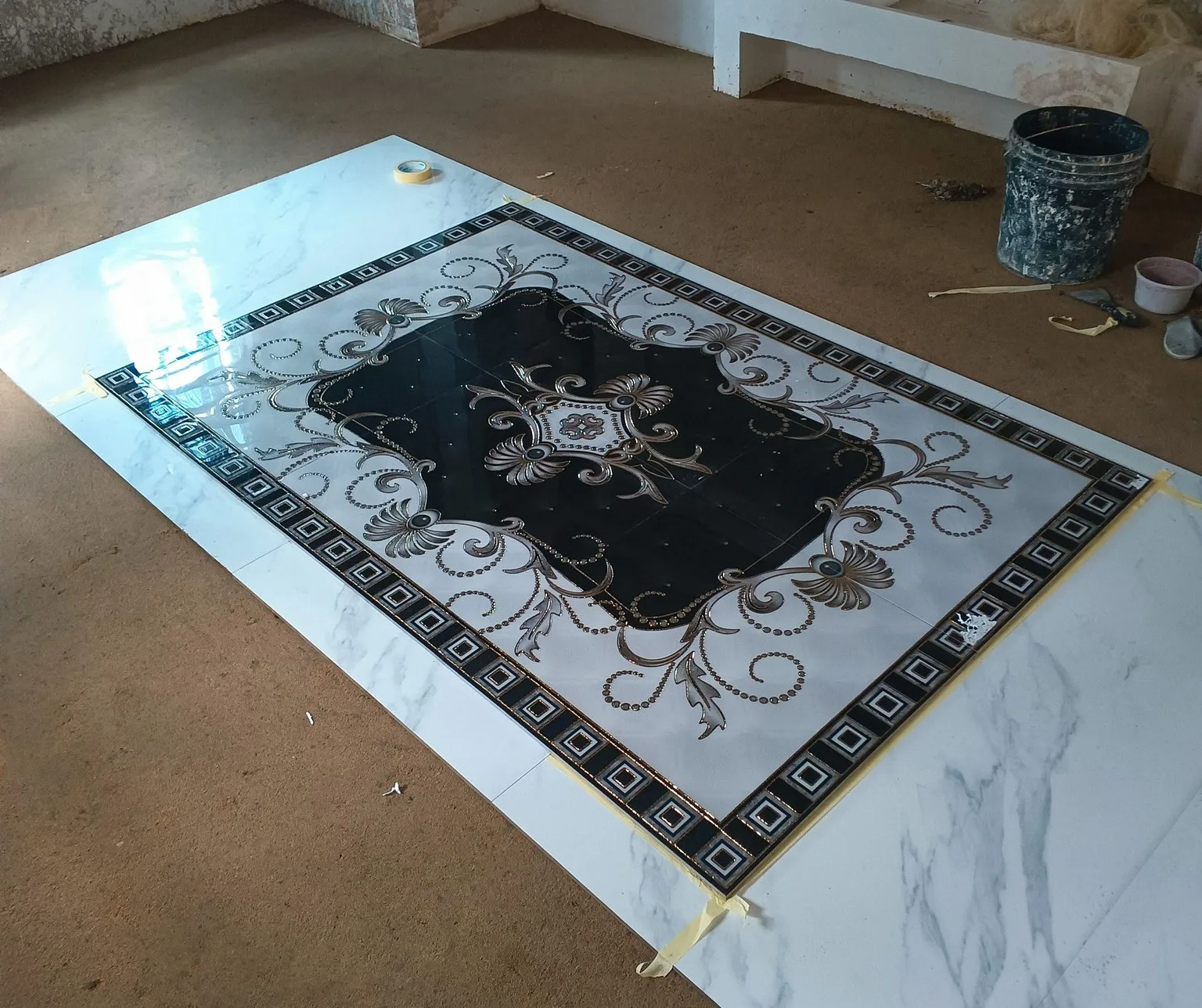
Wastage is an inevitable part of tiling that you must factor into the initial purchase. Standard layouts typically incur 10% wastage from cutting and breakage.
Diagonal or herringbone layouts can push this figure up to 15-20%. Purchasing the exact square footage of your room guarantees you will run short. Our tile calculator can help you estimate your total needs, but always add the extra percentage for wastage.
Buying a replacement box later is risky due to batch variation. Tiles are fired in kilns, and slight temperature differences create "shade batches."
A box bought two weeks later may be technically the same colour but visually distinct enough to create a patchy, mismatched look on your floor. Always buy at least 15% extra upfront and keep the leftovers for any future repairs.
Expert Take on Prioritizing Installation Skill
For any 2026 renovation, prioritize the installer's skill over the cost of the tile itself. A cheap ceramic tile installed perfectly often looks better and lasts longer than an expensive Spanish porcelain slab installed poorly.
Allocate at least Ksh 500 per square metre for labour to secure a craftsman who uses leveling clips and proper adhesive techniques. A perfect installation is the final touch that brings your chosen design to life.