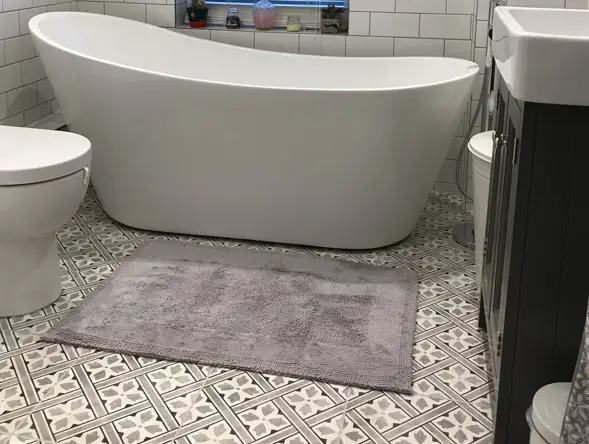
Compact bathrooms require surfacing materials that balance water resistance with the ability to visually expand a confined space.
When planning these wet areas, understanding Twyford tiles prices in Kenya per box serves as the foundation for a budget that prioritises structural integrity alongside aesthetic finish.
The Ksh 1,080 Parity Why Box Price Misleads Bathroom Budgets
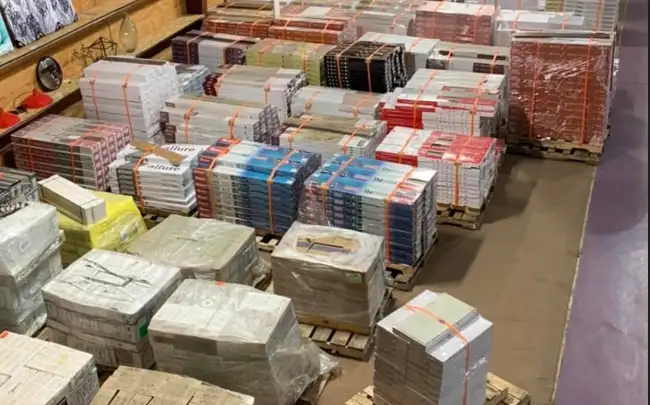
A peculiar pricing anomaly currently exists in the local market regarding Twyford ceramics. The standard FGP30x30 (Floor) and PMCP25x40 (Wall) tiles have reached a parity point, with both retailing at approximately Ksh 1,080 per box.
This creates a misleading "1080 Parity" that often confuses first-time renovators.
Homeowners often assume that because the box price is identical, the cost to tile the walls will be roughly similar to the floor. This assumption fails to account for surface area volume.
While the unit cost remains static, the sheer quantity of ceramic required to cover vertical surfaces dwarfs the flooring requirements. For context, a box of 30x30 floor tiles covers approximately 1 square metre, which may finish a significant portion of a guest cloakroom floor.
In contrast, a box of 25x40 wall tiles, covering 1.5 square metres, barely makes a dent in a standard shower enclosure.
Calculating Real-World Tile Quantities for a Standard Bathroom
Budget overruns often occur when initial estimates meet physical reality. To illustrate the cost disparity, consider a standard Kenyan bathroom measuring 1.5 metres by 2.0 metres, with a ceiling height of 2.4 metres.
The floor area is a straightforward 3 square metres. However, the walls present a perimeter of 7 linear metres.
Even after deducting a standard door (0.8m x 2.1m = 1.68 sqm) and a small ventilation window (0.6m x 0.6m = 0.36 sqm), the wall surface area remains approximately 15 square metres. This creates a 1:5 ratio between floor and wall surface requirements.
An accurate tile calculator is essential for precise estimation.
| Application | Area (Approx) | Boxes Needed (+10% Wastage) | Est. Cost (Ksh 1,080/box) |
|---|---|---|---|
| Floor (30x30 @ 1sqm/box) | 3 sqm | 4 Boxes | Ksh 4,320 |
| Wall (25x40 @ 1.5sqm/box) | 15 sqm | 11 Boxes | Ksh 11,880 |
| Total | — | — | Ksh 16,200 |
The calculation reveals that while the price per box is identical, the wall tiling material costs nearly three times that of the flooring. This figure excludes the additional adhesive and labour required for vertical installation.
Technical Differences Between Twyford Floor and Wall Tiles
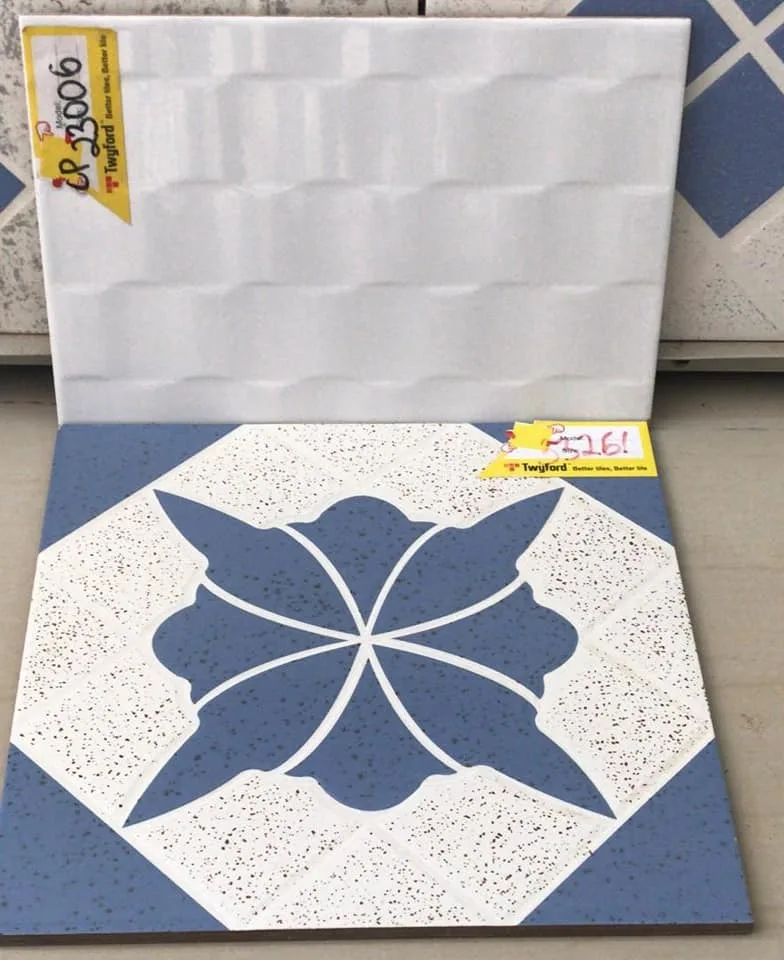
Opting for the correct tile grade prevents future injuries and maintenance issues. Twyford 30x30 floor tiles feature a rougher, matte glaze designed to provide friction.
This grit proves essential when soapy water pools on the floor, offering traction for bare feet to prevent dangerous slips, especially for children or the elderly.
Conversely, the 25x40 wall tiles utilise a softer, glossier biscuit. This high-gloss finish serves a sanitary function; water beads off rapidly, and soap scum wipes away without heavy scrubbing.
However, placing these 25x40 tiles on the floor creates a hazardous, ice-like surface when wet. Their lower breaking strength also means they will likely crack under the weight of a washing machine or consistent footfall.
| Feature | Twyford 30x30 Floor Tile | Twyford 25x40 Wall Tile |
|---|---|---|
| Primary Use | Flooring in wet and dry areas | Wall cladding, shower enclosures, backsplashes |
| Surface Finish | Matte, textured anti-slip glaze | High-gloss, smooth finish |
| Breaking Strength | High (designed to withstand foot traffic) | Lower (not designed for load-bearing) |
| Key Function | Safety (Traction and slip resistance) | Hygiene (Easy cleaning and water runoff) |
Budgeting for Hidden Costs Adhesive Grout Labour and Wastage
The ceramic surface is only part of the final invoice. A durable installation relies on the quality of the bonding materials used.
Neglecting the cost of high-quality tile adhesives leads to "drummy" tiles—hollow-sounding spots that eventually detach from the wall or floor.
Estimating Adhesive and Grout Requirements
Vertical tiling constantly fights gravity. This demands a polymer-modified adhesive with higher grab strength than standard floor cement.
For the 1.5m x 2m bathroom calculated above, you will consume significantly more adhesive for the walls due to the larger surface area and the need to "butter" the back of each tile for full coverage. Grout consumption also varies; 30x30 floor tiles typically require wider spacing (3-5mm), consuming more grout per square metre than the tighter joints used for wall tiles.
Factoring in Professional Tiling Labour Costs
Skilled tilers (fundis) in Kenya generally charge per square metre, not per day. Tiling walls is slower, more physically demanding work that requires precise laser levelling to ensure horizontal lines meet perfectly in the corners.
Expect the labour quote for wall tiling to be substantially higher than for the floor, reflecting the five-fold increase in surface area and the technical difficulty of cutting around shower mixers and pipes.
Accounting for Tile Wastage and Breakage
Bathrooms are full of obstacles. Every corner, drain, and pipe requires a cut tile. Ceramic is brittle, and snap cutters often cause imperfect breaks.
While 10% is the standard industry wastage allowance, small bathrooms with complex plumbing layouts can see this figure rise to 15%. Budgeting for these inevitable breakages prevents a mid-project panic when you run short of a specific batch number.
Design Impact How Tile Choice Affects Small Bathroom Perception
The orientation of the 25x40 wall tile drastically alters the perception of space. Stacked vertically, these rectangular tiles draw the eye upward, making standard 2.4-metre Kenyan ceilings feel higher.
This vertical alignment helps counter the claustrophobic feeling common in apartment bathrooms.
Light manipulation also plays a critical role. The high-gloss finish of Twyford wall tiles acts as a mirror, bouncing artificial light around windowless bathrooms. This reflection helps eliminate shadowy corners, making the room feel brighter and more expansive.
In contrast, the matte 30x30 floor tiles absorb light, grounding the space and effectively hiding dried water spots or stray hairs between cleanings.
Considering Alternatives The Rise of Large Format Porcelain Tiles
Modern design is slowly shifting away from the traditional 25x40 ceramic format. Homeowners seeking a premium, hotel-inspired aesthetic are increasingly installing 60x60 or even 60x120 porcelain tiles on bathroom walls.
These large slabs create a clean, monolithic look by reducing the number of grout lines by up to 80%.
Fewer grout lines mean fewer places for black mould and mildew to grow, resulting in a bathroom that stays hygienic with less cleaning effort.
While the initial material cost for porcelain is higher than standard Twyford ceramic, the reduction in visual clutter offers a seamless, high-end finish that smaller tiles cannot replicate.
Essential Pre-Installation Checks for a Flawless Finish
Batch variation can undermine a perfect renovation. Ceramic tiles are fired in kilns, where slight temperature fluctuations cause subtle colour shifts between production runs.
Ensure every box you purchase carries the same "Tone" or "Calibre" code printed on the side. A shade difference that is barely visible in the hardware store will be obvious once installed under bright LED bathroom lighting.
Always purchase and keep one full box of spare tiles after the project is complete. Store it in a dry place like a garage or loft. Tile designs are frequently discontinued.
If a plumber needs to break a wall tile to repair a leaking pipe five years from now, having a matching spare turns a potential disaster into a minor, inexpensive repair.
Final Verdict On Twyford Tiling for Bathrooms in Kenya
The "1080 Parity" is a useful starting point for pricing, but it is not the bottom line. For a standard bathroom renovation, a realistic budget allocation is around 70-75% for wall tiles and 25-30% for floor tiles.
Always prioritise slip resistance on the floor over pure aesthetics, and invest in a skilled tiler who understands that the longevity of your bathroom depends on the quality of the installation materials, not just the ceramic itself.