Finding the cheapest floor tiles in Kenya often leads homeowners to the stalls of River Road or local hardware depots, where prices for economy grades can dip as low as KES 650 per box.
These deals help stretch a tight renovation budget, but knowing the difference between a bargain and a manufacturing reject is critical. This knowledge ensures your finished floor remains level, safe, and free from the unsightly 'lippage' that plagues low-cost installations.
Our online tile shop offers a wide selection of verified Grade 1 options for every room.
Understanding Tile Grading Systems in the Kenyan Market
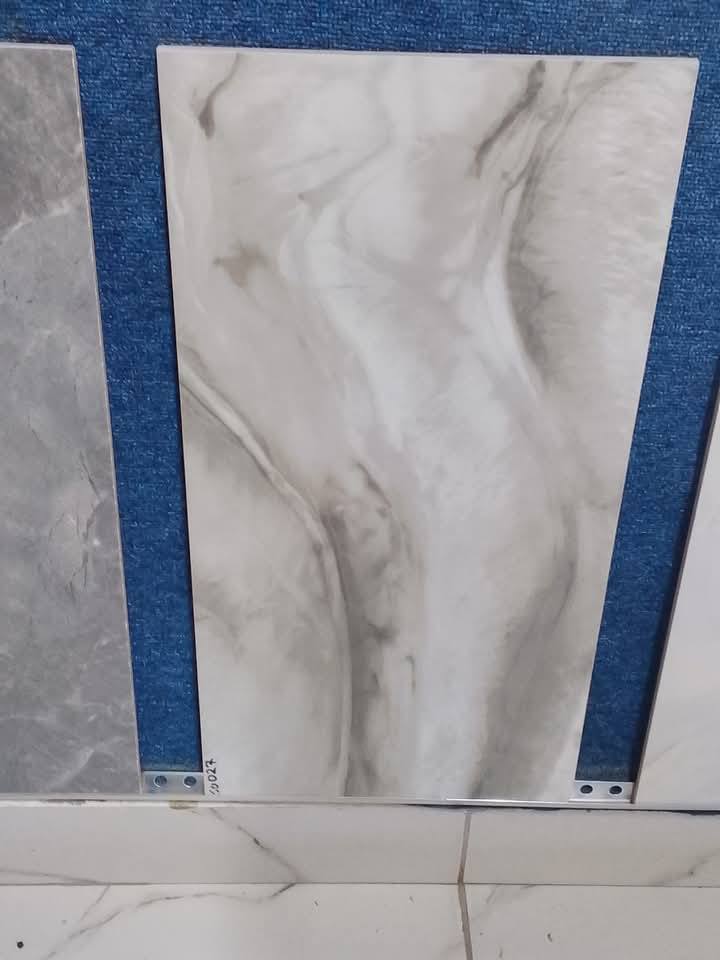
The global tile industry operates on a strict grading system, yet this information is rarely displayed on the price tags in downtown Nairobi. Grade 1 tiles are the "First Choice," meaning they have passed strict quality controls for size uniformity, surface flatness, and glaze consistency.
When you run your hand across a properly installed Grade 1 floor, the transition between tiles feels smooth and indistinguishable.
Economy tiles, often labelled as "Commercial Grade" or "Seconds," contain minor flaws rejected during the primary sorting process. These imperfections might include slight size variations (calibre issues) or microscopic pinholes in the glaze of budget ceramic tiles.
The lower price is attractive, but using economy tiles requires a highly skilled fundi (installer) who can manipulate grout lines to hide these irregularities visually.
Practical Quality Tests to Identify Flaws in Economy Grade Tiles
You do not need laboratory equipment to assess tile quality; your hands and eyes are sufficient tools when visiting a showroom. Hardware stores often display a single, perfect sample, but the boxes in the warehouse tell a different story. Always ask to open a random box before committing to a purchase.
Performing the Tile Wobble Test
This is the definitive "River Road" test for structural integrity. Take two tiles from the same box and place them face-to-face (glaze to glaze). Hold them up to eye level and check for gaps; they should sit flush against each other without any daylight visible between the surfaces.
Next, place the pair on a flat floor and press down on alternate corners. If the tiles rock or "wobble," they are warped (bowed). Installing warped tiles results in lippage, where one tile edge sits higher than its neighbour.
This creates a tripping hazard and rough edges that catch mop strings and accumulate black grime over time.
Visual Inspection for Manufacturing Defects
Hold a tile at a 45-degree angle under a strong light source. You are looking for pinholes—tiny bubbles in the glaze that popped during the firing process.
In a kitchen or bathroom, these microscopic pits become traps for dirt and moisture, eventually turning a pristine white tile dingy and grey regardless of how often you scrub.
How to Decode Tile Packaging and Sourcing Information
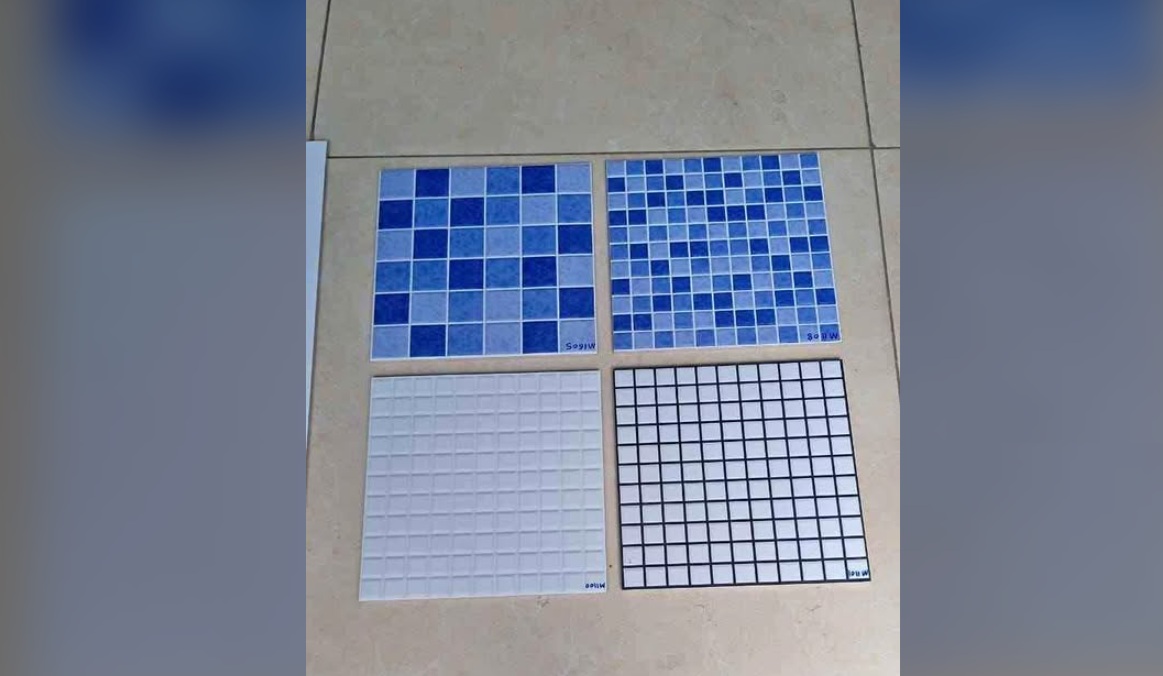
The packaging of imported tiles reveals significant information about their origin and quality tier. Manufacturers separate their production lines straight from the kiln, and the boxing strategy is the first indicator of what you are buying.
Understanding Brown Box versus Blue or White Box Tiles
In the Kenyan construction market, "Blue Box" or "White Box" usually signifies standard, branded export quality—these are typically Grade 1.
The packaging often features clear branding, batch numbers, and calibre codes.
Conversely, the "Brown Box" is industry shorthand for generic economy packaging. These plain cardboard boxes often lack specific branding or detailed technical specs. They frequently contain "run-of-kiln" stock, which is a mix of Grade 1 and Grade 2 tiles.
If you choose Brown Box tiles, be prepared to discard about 15% of the tiles due to visible flaws.
Evaluating the Risks of Informal Tile Markets
Informal markets offer flexibility and room for negotiation, but they lack the accountability of established showrooms.
The risk here is inconsistency. You might purchase 50 boxes, only to find that 20 boxes are from a different production date with a slightly different shade. Once installed, this creates a "checkerboard" effect that ruins the visual flow of an open-plan living room.
The Long Term Performance and Hidden Costs of Economy Tiles
The initial saving at the till often evaporates within the first two years of occupancy. Economy tiles generally have a softer biscuit (the clay body) or thinner glaze, making them less resistant to impact. Dropping a heavy sufuria or a hammer is more likely to cause a spiderweb crack in a cheap ceramic tile than in a dense Grade 1 porcelain.
Durability and Lifespan of Low Grade Floor Tiles
High-traffic areas like corridors and kitchens act as sandpaper on floor finishes. Economy tiles often have a lower PEI (Porcelain Enamel Institute) rating, meaning the pattern or gloss wears off under foot traffic.
You may notice "desire paths"—dull, worn trails where people walk most frequently—appearing within months of installation.
Maintenance Challenges and Unexpected Repair Costs
The hidden cost of uneven tiles lies in the cleaning. When tiles are not perfectly flat, water pools in the low spots rather than draining away. In bathrooms, this leads to persistent mould growth in the grout lines and calcium buildup on the tile face.
Replacing cracked or stained tiles later is difficult, as matching the specific batch and shade of an economy tile years down the line is nearly impossible.
Strategic Budgeting for Floor Tile Procurement
Smart procurement is not just about the price per square metre; it is about calculating the total installed cost. Grade 1 tiles are consistent, meaning you waste fewer of them during cutting and fitting.
Calculating Tile Wastage and Overages
You can use our online tile calculator to estimate the total quantity needed for your project, including this wastage factor.
| Tile Grade | Typical Cost (KES) | Recommended Wastage % | Reason |
|---|---|---|---|
| Grade 1 (Standard) | 1,200 - 2,500+ | 10% | Uniform size and strength mean fewer breakages during cutting. |
| Economy / Commercial | 650 - 950 | 15% - 20% | High likelihood of warping, bowing, and brittleness requiring culling. |
The Importance of Batch Numbers and Shade Codes
Ceramic and porcelain tiles are baked from natural materials, and slight colour shifts occur between production runs. Always ensure every box you buy carries the exact same "Tone" or "Shade" code.
In economy batches, these codes are sometimes missing or mixed. A slight variation from cream to beige might look subtle in the box but becomes glaringly obvious once laid across a large sitting room floor.
How Exchange Rate Volatility Affects Tile Prices
Since the majority of tiles in Kenya are imported from China, India, or Europe, local prices are tethered to the KES-USD exchange rate. When the shilling weakens, importers face higher restocking costs.
The Impact of KES to USD Fluctuations on Imported Tiles
To mitigate losses during currency dips, some traders may release "Flash Sale" stock. These are often older batches or mixed remnants sold at pre-fluctuation prices.
The price is tempting, but these stocks are finite. If you run short by even two boxes, the new shipment will likely be at a higher price point and, more critically, a different colour batch.
The Hidden Costs of Mixed Batches and Shade Variation
If you are forced to finish a room with a different batch, the aesthetic value of your property drops immediately. Prospective tenants or buyers notice mismatched flooring instinctively.
To correct this, you would have to rip out the entire floor, turning a cheap initial purchase into a massive financial loss.
Where to Buy Quality Grade 1 Floor Tiles in Kenya
Securing genuine Grade 1 tiles requires sourcing from some of the best places to buy tiles in Kenya, such as established suppliers who offer warranties on their products.
You pay a premium for the assurance that the tile you see in the showroom is the tile you get in the box.
Reputable Tile Dealers and Showrooms
Established showrooms usually segregate their stock clearly. They will explicitly state if a pallet is "End of Line" or "Commercial Grade." When buying from these sources, retain your receipt and the box labels.
If the tiler discovers warping before installation, reputable dealers will typically exchange the boxes, a service rarely offered in informal street markets.
Evaluating Online Tile Marketplaces
Digital marketplaces offer convenience, but you lose the sensory advantage of feeling the tile texture. If sourcing online, treat the images as a guide only.
Request a physical sample or visit the warehouse to perform the "Wobble Test" personally before authorizing a bulk delivery. High-definition photos can easily mask poor glazing or warped edges.
Installation Best Practices for Grade 1 Tiles to Maximize Longevity
Even the most expensive Grade 1 porcelain can fail if installed poorly. The longevity of your floor is a partnership between the material quality and the artisan's skill.
Hiring Professional Tile Installers
Avoid hiring a general handyman for specialized tiling work. A professional tiler understands how to manage adhesive spread to prevent hollow sounds under the tiles.
They also know how to use tile spacers and levelling clips, which are essential for correcting minor surface undulations in the subfloor.
Ensuring Proper Adhesion and Grouting Techniques
For non-porous Grade 1 tiles (especially porcelain), the traditional cement-sand mix is insufficient. You must use a specialized polymer-modified tile adhesive. This chemical bond ensures the tile grips the floor firmly.
Furthermore, ensure the grout is mixed with a waterproof additive to prevent staining and water seepage, keeping those lines crisp and clean for years.
Making the Smart Choice: Investing in Grade 1 Floor Tiles for Lasting Value
Renovating a home is an exercise in managing limited resources, but flooring is the one surface you interact with every single day.
The cheapest floor tiles in Kenya offer immediate relief to your bank balance, but the daily annoyance of uneven surfaces, difficult cleaning, and visible wear often outweighs the savings.
By performing the simple wobble test and understanding packaging codes, you can navigate the market with confidence, ensuring your investment stands the test of time and traffic. You can browse our products to find a verified Grade 1 tile that provides a perfect foundation for your home.